
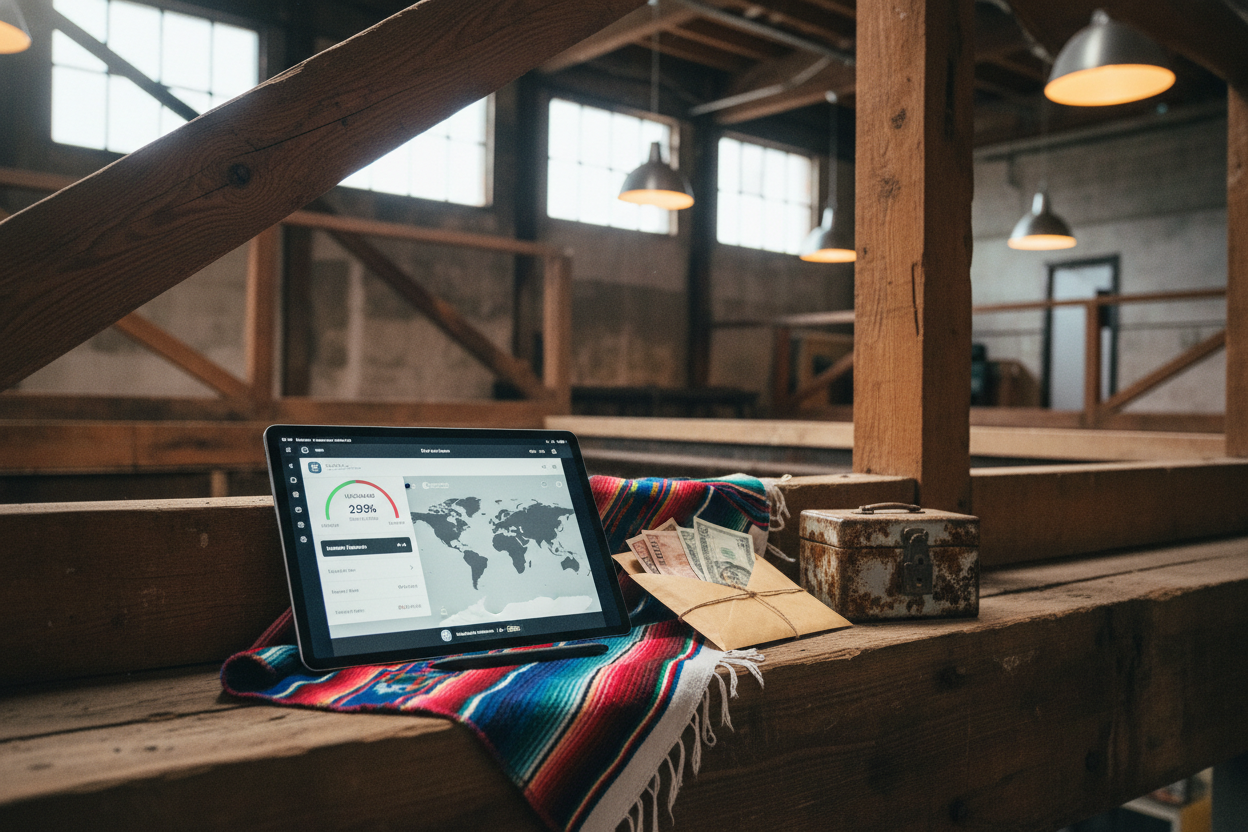
As 2026 unfolds, Mexican families reliant on U. S. remittances face a stark new reality: a 1% tax on cash, money orders, and cashier's checks starting January 1, imposed amid shifting U. S. policies. This levy, coupled with reports of remittances dropping 5.5% due to immigration pressures, squeezes household budgets already stretched thin. Yet USDC, holding steady at $1.00, emerges as a prudent alternative for USDC Mexico remittances. Blockchain-based transfers sidestep traditional channels, delivering dollar-pegged value with fees often under a few cents per dollar sent, faster than wire transfers, and potentially outside the tax net since they avoid fiat cashouts at the border.
Stablecoins like USDC shine in this environment. Recent data from Stripe highlights their edge: near-instant settlement versus days for banks, and costs dwarfed by legacy providers. In Mexico, where remittances top $60 billion annually, low fee USDC Mexico options via partners like Bitso and Ramp Network are gaining traction. But caution prevails; volatility risks linger despite peg stability, and regulatory scrutiny could evolve.
Deciphering the 2026 Remittance Tax Impact on Traditional Flows
The 1% tax, detailed by BBVA Research and EL PAÍS, targets specific U. S. -origin transfers, adding a flat $2.50 fee in some interpretations or proportional bite on larger sums. Paysend and Sendwave tout exemptions for digital methods, underscoring why USDC off-ramps Mexico matter. Traditional giants like Western Union now face compounded headwinds: higher effective costs post-tax, slower SPEI payouts, and OXXO cashout limits. Meanwhile, Inter-American Dialogue forecasts slight LatAm remittance upticks, but Mexico's dip signals urgency for alternatives. USDC users converting to MXN via trusted off-ramps preserve more value, with Alchemy Pay and Coinbase zero-fee on-ramps easing entry.
2026 Innovations Fueling Accessible USDC to Mexico Corridors
February 2026 updates reveal momentum. Alchemy Pay partners with Coinbase for zero-fee USDC buys via Apple Pay or Visa on Cwallet and Bitget, targeting emerging markets like Mexico. Mercuryo and Coinbase slash Base network fees in MetaMask, optimizing Layer 2 efficiency. MoneyGram's Stellar USDC integration spans 180 cashout countries, including Mexican banks and retail. These bolster Mexico cashout USDC viability, pairing with PIX-like speed for near-instant MXN. Yet, analytically, adoption hinges on wallet literacy; families must verify KYC and network compatibility to avoid gas pitfalls.
USDC Price Prediction 2027-2032
Forecast emphasizing $1.00 peg stability amid remittances to Mexico, new taxes, and adoption growth
| Year | Minimum Price | Average Price | Maximum Price | Market Scenario |
|---|---|---|---|---|
| 2027 | $0.98 | $1.00 | $1.02 | Bearish: Remittance tax volatility, regulatory scrutiny; Bullish: Zero-fee onramps drive demand |
| 2028 | $0.99 | $1.00 | $1.01 | Stabilization as stablecoin remittances gain share vs. traditional wires |
| 2029 | $0.99 | $1.00 | $1.01 | Tech boosts: L2 Base network, Stellar integrations lower costs further |
| 2030 | $0.995 | $1.00 | $1.005 | Regulatory clarity in US/Mexico supports peg confidence |
| 2031 | $0.997 | $1.00 | $1.003 | Widespread LatAm adoption, competition managed effectively |
| 2032 | $0.999 | $1.00 | $1.001 | Mature ecosystem with near-perfect peg and high transaction volume |
Price Prediction Summary
USDC is projected to maintain its $1.00 peg with exceptional stability through 2032, supported by surging remittance use cases in Mexico. Minor deviations reflect bearish regulatory risks or bullish demand surges, but average price holds firm amid market cycles, tech advancements, and partnerships like Alchemy Pay, Coinbase, and MoneyGram. Peg tightens progressively with adoption.
Key Factors Affecting USD Coin Price
- USD peg backed by reserves and Circle transparency
- 1% US remittance tax from 2026 accelerates stablecoin shift
- Zero-fee onramps via Alchemy Pay/Coinbase, Mercuryo/MetaMask
- MoneyGram USDC on Stellar for Mexico cashouts
- Regulatory evolution in US/Mexico favoring compliant stablecoins
- L2 tech (Base) and PIX integrations reduce fees
- Competition from USDT but USDC gains in regulated remittances
Disclaimer: Cryptocurrency price predictions are speculative and based on current market analysis. Actual prices may vary significantly due to market volatility, regulatory changes, and other factors. Always do your own research before making investment decisions.
Such infrastructure supports our top USDC to MXN partners: Bitso, Ramp Network, DolarApp, Belo, Tauros Money, Ripio, and Binance P2P. These enable seamless off-ramps to SPEI, OXXO, or bank deposits, often under 1% total fees, tax-free in crypto form until final fiat step.
Spotlight on the Top 7 Lowest-Fee USDC Off-Ramps for Mexico
Bitso leads with robust USDC-to-MXN liquidity, zero spread on large volumes, and OXXO/SPEI cashouts at 0.5-1% fees. Ramp Network pairs USDC with instant PIX equivalents, offering 50% app discounts for sub-0.5% rates; their promo underscores human-centered design. DolarApp simplifies via mobile wallets, converting USDC to MXN cards with minimal 0.3% fees, ideal for daily spends. Belo follows, emphasizing freelancer payouts with direct bank SPEI under 0.8%, bolstered by regulatory compliance.
Tauros Money excels in retail access, USDC off-ramps to 10,000 and points including OXXO at 0.9%, with real-time rates. Ripio's Argentina-Mexico bridge extends low-fee USDC swaps, around 0.6% to MXN via partners. Binance P2P rounds out with peer-driven trades, often fee-free USDC-to-cash at local rates, though vigilance against scams is essential.
These platforms collectively undercut traditional remitters by margins that compound on larger transfers, preserving family security amid Mexico's remittance dip. But selecting the right USDC off-ramps Mexico demands scrutiny of liquidity, KYC rigor, and MXN rate spreads. Fees hover 0.3-1%, yet network congestion or hidden spreads can erode gains.
Top 7 USDC Off-Ramps to Mexico
| Platform | Fee Range | Cashout Options (SPEI/OXXO/Bank) | Speed | Min Amount |
|---|---|---|---|---|
| Bitso | 0.5-1% | all options | instant | $10 |
| Ramp Network | sub-0.5% | PIX/SPEI | near-instant | $5 |
| DolarApp | 0.3% | wallet/card | instant | $1 |
| Belo | 0.8% | SPEI/bank | 5min | $20 |
| Tauros Money | 0.9% | OXXO/retail | real-time | $10 |
| Ripio | 0.6% | partners | 10min | $15 |
| Binance P2P | 0-0.5% | P2P cash | variable | $50 |
Fee Breakdown and Tax Evasion Potential
Analytical breakdown reveals Bitso's edge for high-volume senders: at scale, spreads tighten below 0.5%, with SPEI payouts hitting accounts in seconds. Ramp Network's 50% app promo drops effective costs under 0.3%, ideal for frequent small sends, as their materials emphasize. DolarApp prioritizes usability, layering USDC into reloadable MXN cards for OXXO top-ups or ATM draws, fees shaved to 0.3% via volume incentives. Belo's compliance focus suits businesses, routing USDC through regulated SPEI at 0.8%, minimizing reversal risks.
Tauros Money bridges urban-rural gaps, channeling USDC to over 10,000 retail points like OXXO for 0.9% fees, crucial where banks falter. Ripio leverages regional networks for 0.6% conversions, extending Argentina expertise to Mexico's corridor. Binance P2P tempts with near-zero fees via direct peer matches, but demands caution: verify trader ratings and escrow to sidestep fraud, a persistent issue in decentralized trades.
Critically, these off-ramps position USDC transfers outside the 1% tax snare. As Paysend and Sendwave note for their digital flows, crypto legs until fiat conversion likely exempt, per current interpretations. BBVA warns of evolving rules, so monitor Banxico updates. USDC's $1.00 peg, unyielding per latest feeds, shields against FX volatility plaguing unhedged wires.
Risks, Best Practices, and Use Case Matches
Cautiously, no corridor is flawless. Gas fees on Ethereum can spike, favoring Base or Stellar integrations like MoneyGram's. KYC delays plague newcomers; pre-register wallets. Scam vigilance tops the list for P2P, while liquidity dries in off-hours for smaller players. Match platforms to needs: DolarApp or Ramp for micro-sends under $100, Bitso for $1,000 and, Tauros for cash-preferring recipients.
Freelancers favor Belo or Ripio for invoice payouts, integrating API hooks for automation. Families lean OXXO via Tauros amid bank distrust. Always simulate transfers: input $500 USDC at $1.00 peg, tally net MXN post-fees. Recent Alchemy zero on-ramps sweeten the full loop, but test small first.
2026's landscape favors the prepared. With remittances rebounding per Inter-American Dialogue yet Mexico lagging, low fee USDC Mexico via these seven fortifies budgets. Stablecoin momentum, from Coinbase partnerships to Stellar expansions, signals staying power. Families securing more MXN per dollar sent build resilience against policy shocks. Prioritize verified volumes and user reviews on LatamRemitsTable. com for corridor mastery.

No comments yet. Be the first to share your thoughts!