
Remittance stablecoins in 2026
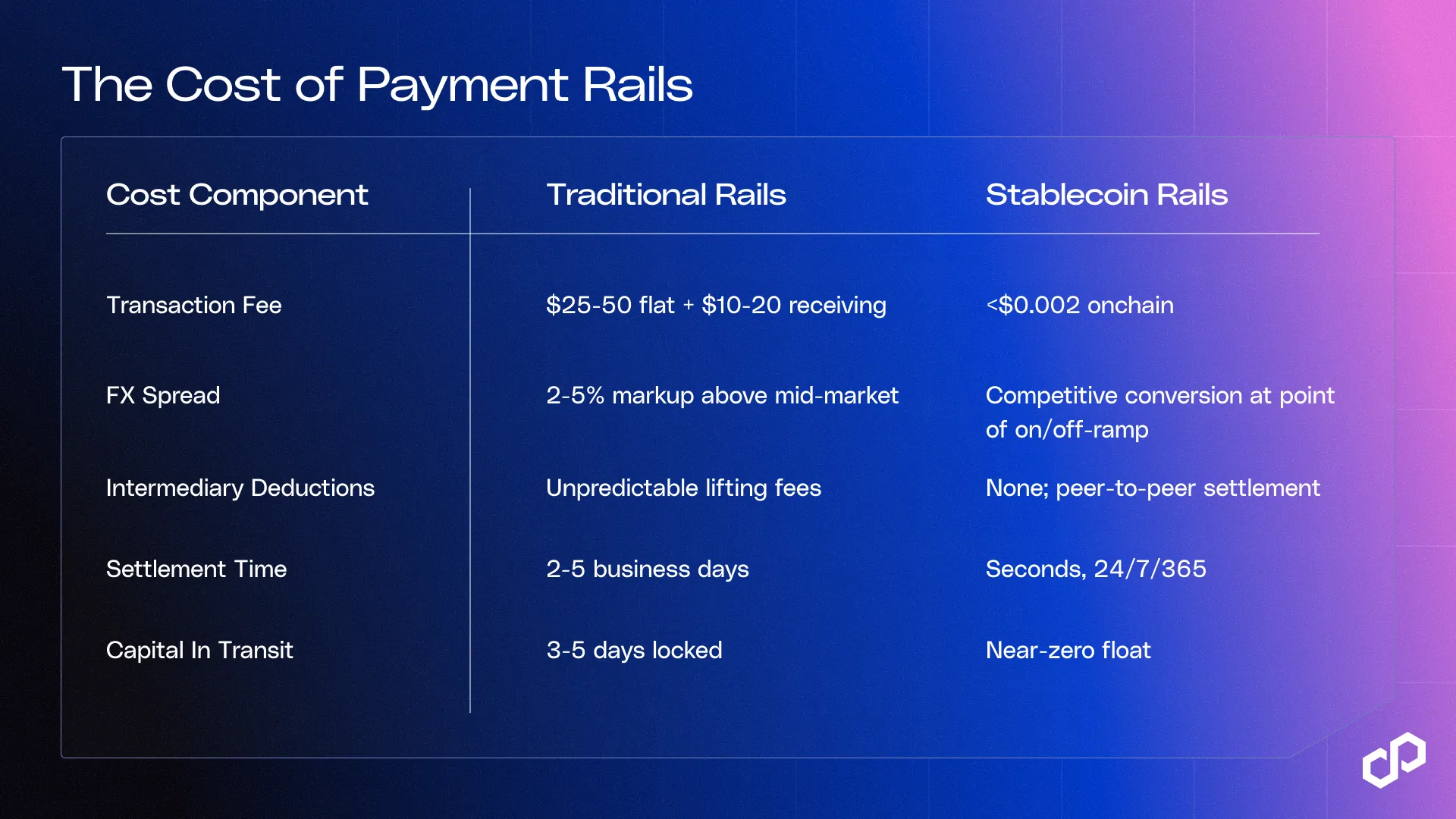
The landscape for cross-border payments has shifted dramatically. While stablecoin transaction volumes reached roughly $33 trillion in 2025, their role in LATAM remittances is distinct from global settlement volumes. Traditional money transfer operators still charge an average of 6.49% per send, creating a clear opening for lower-cost digital alternatives. We selected the five most viable options based on regulatory compliance, LATAM liquidity depth, and actual on-ramp fees rather than theoretical on-chain costs.
Most readers mistakenly believe stablecoin transfers are free. While the blockchain movement costs fractions of a cent, the real expense sits at the edges. On-ramp fees for converting fiat to USDC or USDT typically range from 0.1% to 0.5%. Our selection prioritizes protocols that minimize these edge costs while maintaining strict adherence to the regulatory frameworks expected in 2026. This approach ensures your funds arrive safely without hidden friction.
5 Secure Remit Stablecoins for LATAM Cross-Border Payments in 2026
Cross-border remittances in LATAM face persistent friction from high fees and slow settlement times. This roundup evaluates five secure, compliant stablecoins that offer faster, lower-cost alternatives for individuals and businesses in the region.
1. USDC (USD Coin)
USDC is the standard for regulatory compliance in LATAM remittances. Issued by Circle, it is fully backed by cash and short-term U.S. Treasury bonds, providing a level of transparency that traditional money transfer operators cannot match. For remitters in the U.S. or Europe sending funds to Mexico, Colombia, or Brazil, USDC offers the highest likelihood of seamless integration with local banking partners and regulated exchanges.
Best for: Users prioritizing safety and regulatory clarity over maximum liquidity depth in niche corridors. Tradeoff: Slightly lower liquidity on some smaller LATAM P2P platforms compared to USDT, potentially leading to wider spreads on very small transactions.
2. USDT (Tether)
Tether (USDT) remains the dominant stablecoin in LATAM due to its unparalleled liquidity across peer-to-peer (P2P) markets and local exchanges like Binance and Bybit. In countries with strict capital controls or limited banking access, such as Venezuela or Argentina, USDT is often the only viable digital dollar alternative. Its widespread acceptance means recipients can easily find buyers for their USDT at near-market rates.
Best for: High-volume remittances into corridors with limited banking infrastructure or strict currency controls. Tradeoff: Lower regulatory transparency compared to USDC. Users must rely on Tether’s quarterly attestations rather than real-time proof of reserves, introducing counterparty risk.
3. DAI (Decentralized Autonomous Currency)
DAI is a decentralized, crypto-collateralized stablecoin that operates independently of any central issuer. While less common in traditional remittance flows, DAI is gaining traction among tech-savvy users in LATAM who prefer non-custodial solutions. It is particularly useful for users who already hold crypto assets and want to send value without converting to fiat first. Integration with decentralized finance (DeFi) protocols allows for automated yield generation while funds are in transit.
Best for: Users comfortable with DeFi who want to avoid centralized intermediaries entirely. Tradeoff: Higher complexity for recipients. Off-ramping DAI to local fiat often requires an extra step of converting to USDC or USDT first, adding time and potential fees.
4. PYUSD (PayPal USD)
Launched by PayPal, PYUSD is a new entrant designed to leverage PayPal’s massive existing user base in LATAM. For remitters who already use PayPal for e-commerce or services, PYUSD offers a frictionless on-ramp and off-ramp experience. PayPal’s regulatory standing in the U.S. and growing presence in LATAM makes it a trustworthy option for casual users who may not have dedicated crypto wallets.
Best for: Casual users already embedded in the PayPal ecosystem who want a familiar interface. Tradeoff: Limited to PayPal’s supported corridors and users. Not suitable for direct on-chain transfers or use on decentralized exchanges, restricting flexibility.
5. FDUSD (First Digital USD)
FDUSD has emerged as a low-fee alternative for high-frequency traders and remitters moving large volumes. Backed by First Digital Labs, it offers deep liquidity on major exchanges like Binance and OKX, often with zero trading fees for certain pairs. For remitters sending large sums where even small percentage differences matter, FDUSD can reduce overall costs through exchange fee structures.
Best for: High-volume remitters using major centralized exchanges who want to minimize trading fees. Tradeoff: Lower brand recognition and regulatory history compared to USDC or USDT. Users should monitor the issuer’s reserve audits closely.
Pick the right fit
Use this section to make the Top 5 Secure Remit Stablecoins for LATAM Cross-Border Payments decision easier to compare in real life, not just on paper. Start with the reader's actual constraint, then separate must-have requirements from details that are merely nice to have. A practical choice should survive normal use, maintenance, timing, and budget. If a recommendation only works in an ideal situation, call that out plainly and give the reader a fallback path.
-
Verify the basicsConfirm the core specs, condition, and fit before comparing extras.
-
Price the downsideLook for the repair, maintenance, or replacement cost that would change the decision.
-
Compare alternativesCheck at least two comparable options before treating one listing as the benchmark.
FAQ: Stablecoins for LATAM Remittances
Can stablecoins be used for remittances? Yes. Stablecoins act as digital rails for cross-border transfers, moving value across borders in minutes rather than days. The Inter-American Development Bank notes that stablecoin transaction volumes reached approximately $33 trillion in 2025, demonstrating their growing role in global payments. For LATAM, this means faster settlement times compared to traditional wire transfers, though users must still navigate local on-ramps and off-ramps to access fiat currency.
Is XRP considered a stablecoin? No. XRP is a native cryptocurrency designed for settlement and liquidity, not a stablecoin. Stablecoins are pegged to a reserve asset, typically the US dollar, to maintain a constant value. XRP’s price fluctuates based on market supply and demand, making it unsuitable for remittances where preserving the exact transfer amount is critical. For LATAM remittances, users should stick to USDT, USDC, or other dollar-pegged tokens.
What are the top 3 stablecoins? In the LATAM remittance market, the top three are USDT (Tether), USDC (USD Coin), and USDP (Pax Dollar). USDT dominates due to its widespread liquidity across exchanges and payment processors. USDC is often preferred for its regulatory transparency and compliance with US standards. USDP serves as a reputable alternative with strong institutional backing. These three offer the best balance of liquidity, acceptance, and regulatory clarity for cross-border transfers.
How much does it cost to transfer stablecoins? On-chain transfer fees are negligible, often less than a cent. However, the total cost includes on-ramp and off-ramp fees. Converting fiat to stablecoins typically costs 0.1% to 0.5%, while converting stablecoins back to local currency may incur similar fees. According to World Bank data, traditional remittances average 6.49%, making stablecoins significantly cheaper. The real expense lies in the service providers facilitating the fiat conversion, not the blockchain itself.
Helpful gear
Use these product recommendations as a starting point, then choose the size, material, and price point that fit how you actually use the gear.


As an Amazon Associate, we may earn from qualifying purchases.
No comments yet. Be the first to share your thoughts!