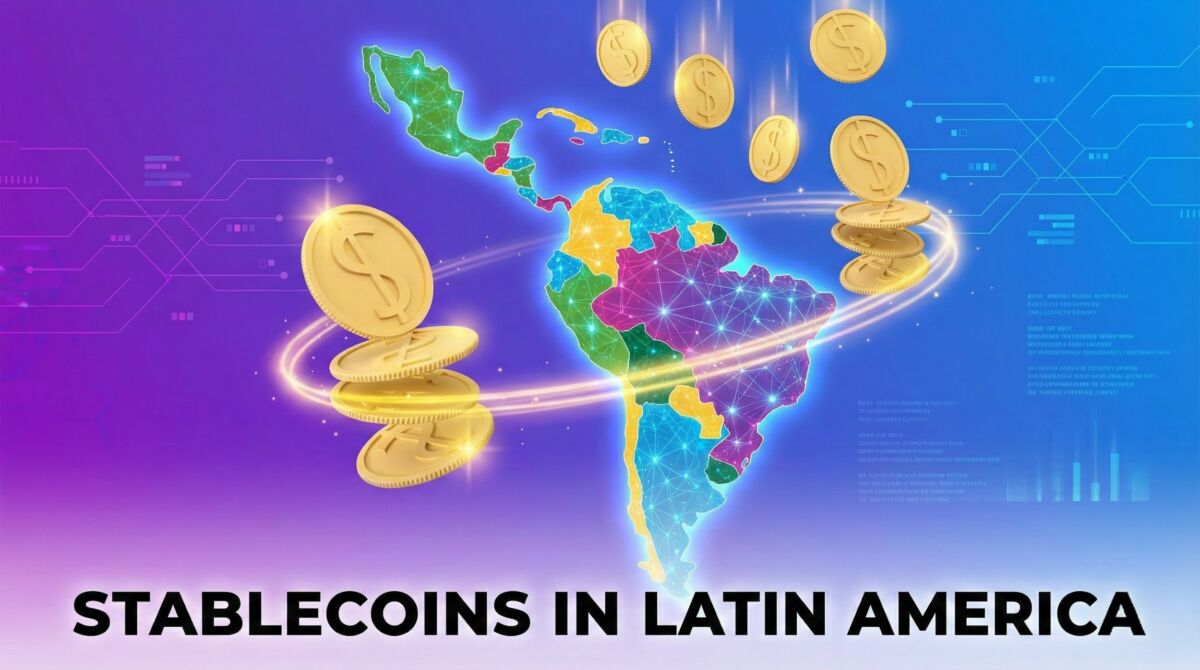
Why stablecoins dominate LATAM remittances
Traditional cross-border payments in Latin America have long been plagued by high fees and slow settlement times. According to Rebelfi, remittance costs in the region typically range from 6% to 10%, a significant drain on families relying on these funds for daily expenses. This financial friction, combined with local currency instability, has created a perfect environment for stablecoins to step in as a more efficient alternative.
Stablecoin rails are now offering a compelling solution by drastically reducing these costs. Polygon reports that banks and enterprises in LATAM are cutting cross-border payment expenses by 30% to 50% when switching to stablecoin infrastructure. This cost reduction is not marginal; it represents a fundamental shift in how money moves across borders, making stablecoins the optimal choice for users seeking to maximize the value of their transfers.
The speed of these transactions further solidifies their dominance. While traditional wires can take days to clear, stablecoin transfers settle in minutes, often at a fraction of the cost. This efficiency is particularly valuable in LATAM, where immediate access to funds can be critical for managing daily financial needs.
As the technology matures and adoption grows, stablecoins are becoming the preferred method for remittances in the region. For users in LATAM, this means more money stays in their pockets, and less is lost to intermediary fees and exchange rate spreads.
5 Best Stablecoin Remittance Apps for LATAM in 2026
Cross-border payments in LATAM remain plagued by high fees and slow settlement times, but stablecoin remittance apps are changing the landscape. We evaluated Bitso, Wally, Mural Pay, and BlindPay against official documentation to identify the most reliable tools for 2026.
1. Bitso for Mexico and Argentina corridors
Bitso dominates the Mexico-Argentina remittance corridor by leveraging its deep integration with local fiat on-ramps. Users can convert USDT to pesos or Argentine pesos with remarkable speed, bypassing traditional banking delays. The platform’s regulatory compliance in both countries ensures a secure environment for high-volume transfers, making it a reliable choice for families moving money across borders.

2. Wally for instant Colombian peso payouts
Wally specializes in instant Colombian peso payouts, targeting the urgent needs of migrants sending money home. By utilizing stablecoin rails, Wally bypasses the sluggish traditional banking system, ensuring funds arrive in seconds rather than days. This speed is critical for households relying on timely support, offering a seamless experience that prioritizes liquidity and user convenience above all else.
3. Mural Pay for high-volume B2B transfers
Mural Pay addresses the complex needs of high-volume B2B transfers within LATAM, offering scalable solutions for businesses. Its infrastructure supports large-scale stablecoin movements with minimal friction, catering to corporate treasuries and cross-border suppliers. By focusing on enterprise-grade reliability, Mural Pay ensures that significant financial flows are executed efficiently, reducing operational costs and enhancing cash flow predictability for commercial entities.
4. BlindPay for emerging LATAM markets
BlindPay targets emerging LATAM markets where traditional financial infrastructure is sparse. By focusing on accessibility and low barriers to entry, it enables users in underserved regions to participate in the stablecoin economy. The app’s design prioritizes ease of use for those new to digital finance, bridging the gap between unbanked populations and global financial systems through intuitive, mobile-first technology.
5. Amazon hardware wallets for secure storage
For users managing stablecoin remittances, secure storage is paramount. Amazon offers a variety of hardware wallets that provide an extra layer of protection for your digital assets. These devices keep private keys offline, safeguarding against online threats and ensuring that your remittance funds remain secure during transit and storage, giving you peace of mind when sending money across borders.

USDC vs. USDT for LATAM Remittances
Choosing between USDC and USDT often comes down to balancing speed against institutional trust. In the LATAM remittance market, Tether (USDT) remains the dominant force by volume. Its deep liquidity ensures that apps like Bitso and Wally can process high-value transfers quickly, making it the practical choice for high-frequency, peer-to-peer remittances where immediate settlement is critical.
USDC (USD Coin) is gaining ground among users who prioritize regulatory clarity and transparency. Its growing institutional trust makes it a preferred option for B2B settlements and larger, more formal transactions. As noted by industry analyses, USDC adoption is rising fast in the region, particularly among platforms that cater to businesses seeking a more compliant infrastructure for cross-border payments.
For most individual users sending money to family, USDT’s network effects and widespread acceptance across LATAM fintech apps make it the safer bet for speed and ease of use. However, if you are managing business flows or require a token with a more transparent reserve structure, USDC offers a compelling alternative without sacrificing the core benefits of stablecoin remittances.
| Feature | USDT | USDC |
|---|---|---|
| Market Share | Highest in LATAM | Growing rapidly |
| Best For | High-speed P2P remittances | B2B and compliance-focused transfers |
| Adoption | Widely supported by Bitso, Wally | Preferred by emerging fintechs like Mural Pay |


As an Amazon Associate, we may earn from qualifying purchases.
Frequently asked questions about stablecoin remittances
What are the main trends in stablecoin remittances for 2026? Stablecoins have evolved from speculative assets into a primary global payment rail. The strongest momentum in 2026 comes from cross-border transfers and B2B settlements, where enterprises are adopting stablecoin infrastructure to capture immediate efficiency gains over traditional banking systems.
Which token is best for sending money to LATAM? Tether (USDT) remains the most widely used stablecoin for remittances across Latin America, consistently ranking as a top cryptocurrency by market capitalization. USDC adoption is also rising rapidly as users seek regulated alternatives, but USDT retains the highest liquidity for everyday transfers.
How much can I save compared to traditional banks? Banks in LATAM are cutting cross-border payment costs by 30–50% when using stablecoin rails. By bypassing correspondent banks, platforms like Bitso and Wally offer transparent fee structures that are significantly lower than legacy wire transfers.
Are stablecoin remittances safe for everyday users? Stablecoins like USDT and USDC are pegged to the U.S. dollar with 1:1 backing, reducing currency volatility risks. However, safety depends on the platform. Use reputable apps with strong compliance records to ensure your funds are secure during transit.
Do I need a crypto wallet to send money? Most LATAM-focused apps, such as Mural Pay and BlindPay, allow you to send and receive funds using just a mobile number or email. You do not need to manage private keys or complex wallet addresses, making the technology accessible to non-technical users.
No comments yet. Be the first to share your thoughts!