
Why stablecoins cut remittance costs
Sending money to Latin America has long been expensive. The World Bank’s 2026 survey of money transfer operators shows that sending international remittances costs an average of 6.49% of the amount sent.
That figure sits well above the G20’s target of 1%. For a family relying on regular transfers from relatives abroad, those fees eat directly into living expenses. Stablecoins offer a way to bypass the traditional banking corridors that drive these costs up.
By settling transactions on public blockchains, stablecoins can drop fees to under 1%, even when accounting for exit and entry costs. This efficiency matters most for smaller transfers, where flat fees or percentage-based charges disproportionately impact the recipient.
The regulatory landscape is also shifting. In July 2025, the U.S. Congress passed the Genius Act, which established a clear framework for payment stablecoins.
The Federal Reserve notes that this law defines what constitutes a compliant payment stablecoin, adding a layer of trust that was previously missing from the crypto space. This regulatory clarity helps institutional players enter the market, further driving down costs through competition and infrastructure improvements.
For now, the gap between traditional and crypto-based remittances remains stark. While traditional channels still dominate volume, the cost advantage of stablecoins is clear. As more users and businesses adopt these tools, the pressure on traditional money transfer operators to lower their fees will only increase.
USDC vs USDT for LATAM corridors
Choosing between Circle’s USDC and Tether’s USDT for Latin American remittances comes down to a trade-off between regulatory safety and on-ramp liquidity. As of 2026, the US market has shifted significantly in favor of USDC due to the passage of the Genius Act, which established a clear federal framework for payment stablecoins [src-serp-3]. For senders originating in the United States, USDC offers a compliance-friendly path that reduces friction for banks and payment processors.
However, the destination matters just as much as the origin. In many Latin American markets, particularly Brazil, USDT remains the dominant asset for peer-to-peer trading and local exchange liquidity. The USDT/BRL pair often offers deeper order books and tighter spreads on local platforms than USDC equivalents. This liquidity advantage can translate to better final exchange rates for the recipient, even if the USDC sender enjoys a smoother regulatory experience at the origin.
Network fees also play a role in corridor economics. USDC is widely supported on low-cost networks like Polygon and Solana, making it efficient for smaller remittance amounts. USDT, while available on similar chains, sees heavy usage on TRON for Latin American transfers, which keeps fees minimal but introduces different technical considerations. The choice often depends on whether the priority is legal clarity (USDC) or local market depth (USDT).
| Feature | USDC | USDT |
|---|---|---|
| 2026 Regulatory Status | High (Genius Act compliant) | High (Genius Act compliant) |
| Primary Network for LATAM | Polygon / Solana | TRON / BSC |
| Brazil (BRL) Liquidity | Moderate | High |
| US Origin Compliance | Preferred | Acceptable |
Sending USDC to COP, ARS, and BRL
The headline fee for a USDC transfer is often near zero, but the final cost depends on the on-ramp and off-ramp. You pay to convert fiat into stablecoins and then back into local currency. This friction point determines the real cost of sending money to Colombia, Argentina, or Brazil.
For Colombian pesos (COP), services like Binance P2P or local fintechs offer tight spreads. The USD/COP pair is deep, meaning you lose very little to the bid-ask spread. However, you must verify that the off-ramp partner supports instant local bank deposits. If the receiver waits two days for funds, the value of the transfer may shift with market movements.

Argentina’s peso (ARS) presents a different challenge. The official exchange rate is often disconnected from the real value of money. Sending USDC allows you to bypass the strict capital controls and the "blue dollar" spread. But you must choose an off-ramp that respects the parallel market rate. Using the official rate will result in a significant loss of value for the receiver.
Brazil’s real (BRL) is one of the most efficient pairs for stablecoin remittances. The Pix instant payment system allows for near-instant settlement of USDC to BRL. Major Brazilian exchanges like Mercado Bitcoin offer low fees for this conversion. The liquidity is high, and the regulatory framework is clear, making it a straightforward corridor for senders.
Avoid hidden fees and slippage
The blockchain fee for sending a stablecoin is often negligible—sometimes less than a penny. However, this is only the first step in a multi-stage process. The real cost of remittance lies in the "last mile": the local exchange spread and the withdrawal fee charged by the final receiver's platform.
If you only look at the on-chain gas cost, you will miss the 2% to 3% that disappears when your stablecoin is converted to local fiat currency. This spread is where many remittance services hide their margins, effectively erasing the savings gained from using blockchain infrastructure.
To calculate the true cost of a transfer, you must trace the entire lifecycle of the funds. A $100 transfer might arrive with $97 after the receiver converts it to local currency, even if the on-chain fee was zero. Understanding this full picture is essential for choosing a provider that actually meets the G20's target of keeping remittance costs below 5%.
Calculate the true cost of your transfer
Follow these steps to audit your remittance costs and avoid unexpected deductions.
Start by verifying the on-chain network fee for the specific blockchain you are using (e.g., Polygon, Solana, or Ethereum). While Ethereum can be expensive, most remittance-focused stablecoins use low-cost Layer 2 networks. Note this base fee as your starting point.
Before sending, check if the receiving exchange has minimum withdrawal limits or flat fees for fiat payouts. Some platforms charge a fixed $1 to $5 fee per withdrawal, which disproportionately affects smaller transfers. Ensure the fee structure aligns with your transfer size.

The most significant hidden cost is the spread between the stablecoin's peg and the local fiat currency. Research the exchange rate offered by the receiving platform compared to the mid-market rate. A spread of 2% to 3% is common and often goes unnoticed by senders.
Add the network fee, the withdrawal fee, and the estimated cost of the spread to your total transfer amount. This gives you the real cost of the transaction. Use this figure to compare against traditional remittance services like Western Union or local bank transfers.
2026 Regulatory Risks
The legal landscape for remittance stablecoins shifted dramatically in July 2025 with the passage of the GENIUS Act. This legislation established the first federal framework for payment stablecoins in the United States, creating clear rules for reserves and consumer protections. For cross-border payments, this means US-issued stablecoins now operate under a defined federal umbrella, reducing some of the ambiguity that previously clouded compliance. However, this US-centric framework is only one piece of the puzzle. The Federal Reserve notes that while the GENIUS Act clarifies US issuance, it does not override local laws in the recipient countries.
Latin American countries are moving quickly to define their own boundaries. Brazil has integrated stablecoins into its existing PIX payment infrastructure, requiring strict adherence to central bank guidelines. In Argentina, recent tax laws have introduced specific reporting requirements for crypto-to-fiat conversions, affecting how remittance providers must structure their withdrawals. These local regulations create a fragmented compliance environment. A provider must navigate US federal rules for the issuance side while simultaneously adhering to diverse national laws for the settlement side.
This dual-layered risk means that "compliance" is no longer a single checkbox. It is a continuous operational challenge. Providers that fail to adapt to local LATAM regulations risk losing access to critical banking rails or facing significant fines. The GENIUS Act reduces US-based regulatory uncertainty, but it does not eliminate the need for robust local legal strategies in every country where remittances are received.
Stablecoin settlement volumes are accelerating
The market for stablecoin remittances has moved beyond experimental pilot programs into significant volume. In February 2026, stablecoins settled $7.2 trillion in transaction value, demonstrating that the infrastructure can handle massive throughput [src-serp-6]. This growth is driven by the persistent inefficiency of traditional rails; cross-border remittances still cost an average of 6.49% globally, far exceeding the G20’s 3% efficiency target.
As regulatory frameworks like the GENIUS Act provide clarity, adoption is scaling. Industry projections indicate stablecoins will represent 3% of all US dollar payments in 2026, rising to 10% by 2031 [src-serp-7]. For Latin American corridors, this shift offers a direct path to reducing the friction and cost that currently erodes migrant workers' earnings.
Common questions about stablecoin remittances
Stablecoins have moved beyond speculative crypto trading to become a practical tool for cross-border payments. The U.S. Congress passed the Genius Act in July 2025, establishing a regulatory framework that clarifies how payment stablecoins operate, which has accelerated adoption in Latin America where traditional remittance fees remain high.
Can stablecoins be used for remittances?
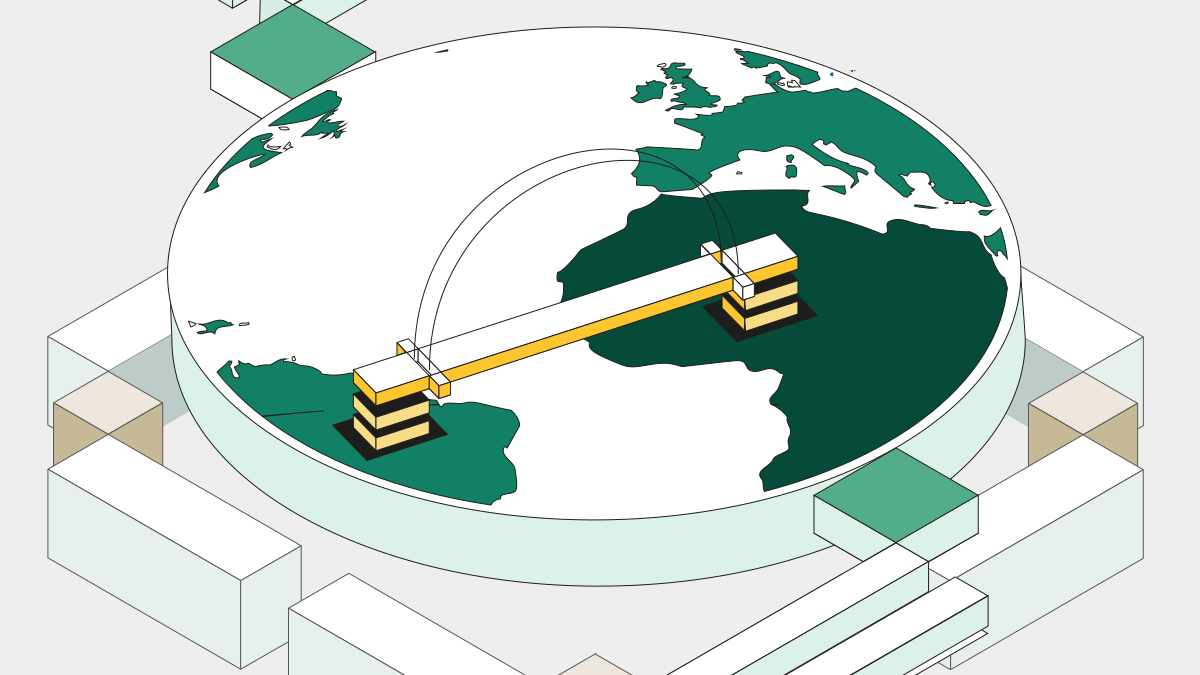
Yes. Stablecoins allow senders in the U.S. or Europe to transfer value to recipients in Latin America in minutes rather than days. While global average remittance costs sit at 6.49%, stablecoin networks can process these transactions for a fraction of that cost, helping to close the gap toward the G20's 3% target.
What is the projected market cap of stablecoins in 2026?
The stablecoin market has expanded significantly. According to Brookings, the total value held in stablecoins grew from $6.8 billion in 2020 to $273 billion in 2026. This growth reflects increasing trust in regulated tokens and their utility for everyday commerce and remittances.
What are the top 3 stablecoins?
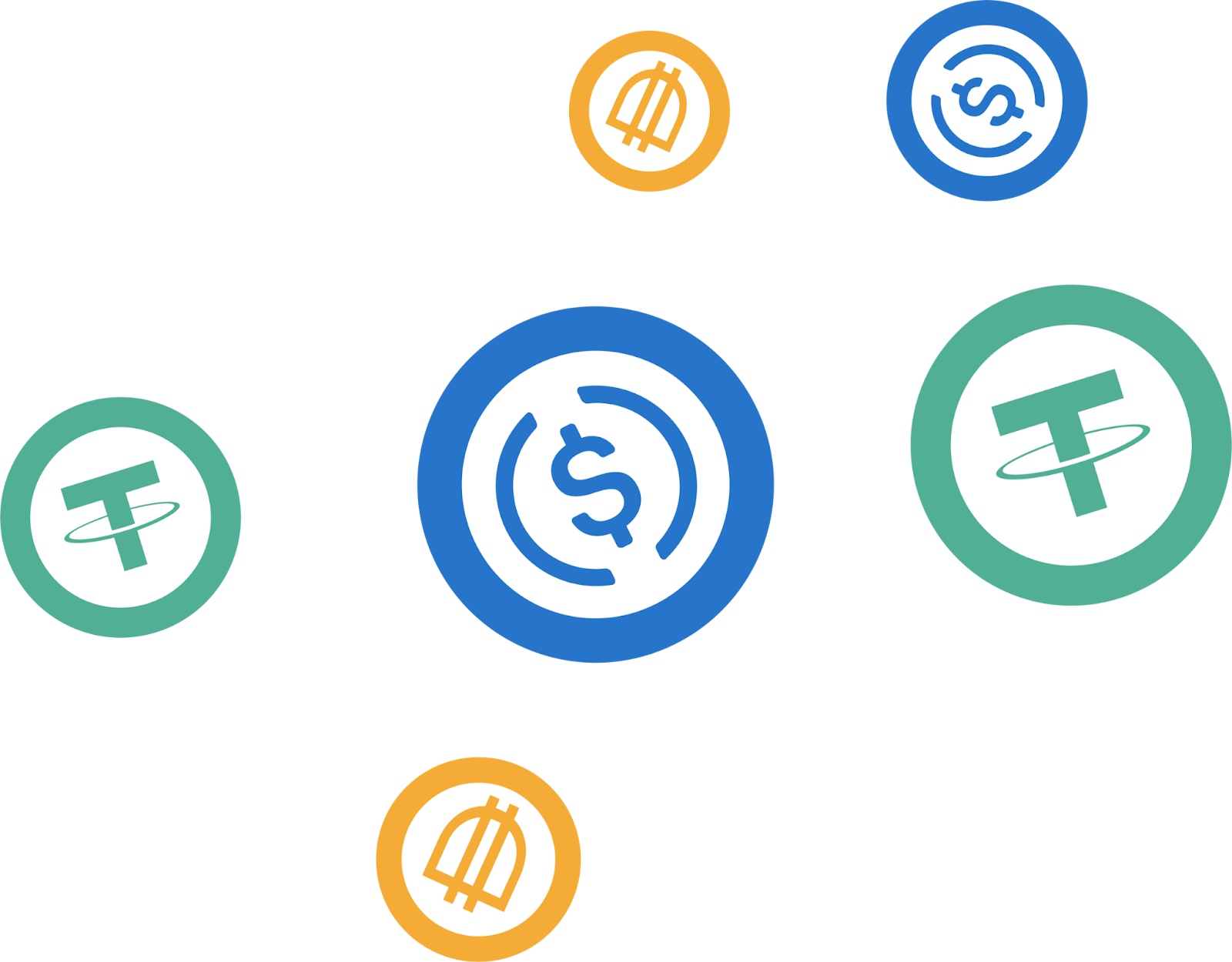
The market is dominated by tokens pegged to the U.S. dollar. USDT (Tether), USDC (Circle), and DAI (MakerDAO) remain the most widely used for remittances due to their liquidity and widespread acceptance on major blockchain networks. USDC is often preferred in regulated environments due to its transparency.
Which company expanded stablecoin settlement capabilities across additional blockchains in 2026?
Major payment processors and stablecoin issuers have been integrating across multiple chains to reduce friction. In 2026, several key players expanded settlement layers to include Ethereum, Solana, and Layer-2 solutions, allowing users to choose lower-cost networks for smaller remittance amounts.
No comments yet. Be the first to share your thoughts!