Why stablecoin remittance LATAM 2026 matters
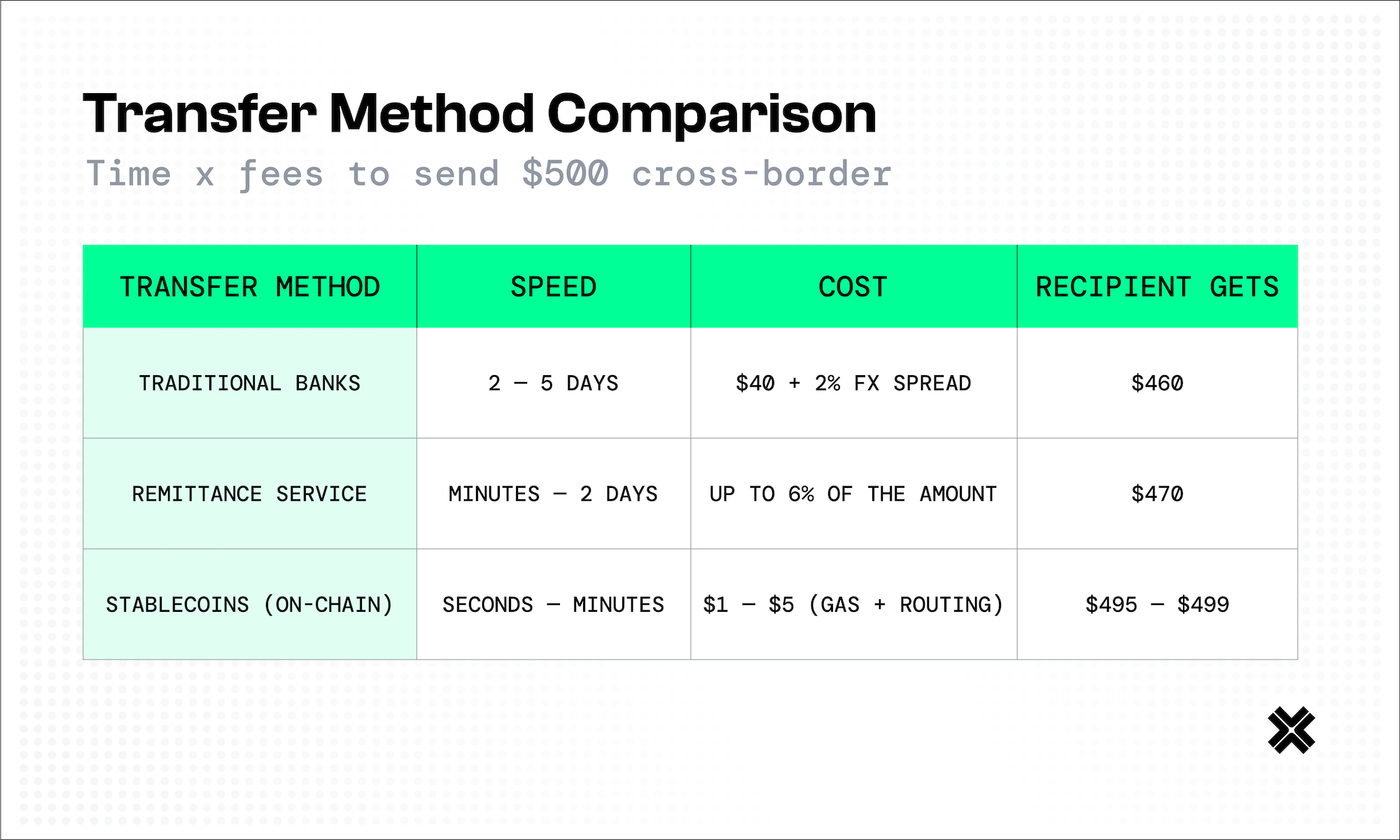
Traditional money transfer services have long extracted a heavy toll from Latin American families. Sending money across borders often involves fees that eat up 6% or more of the principal, alongside slow settlement times and opaque exchange rate margins. For migrant workers supporting relatives back home, these costs represent a significant loss of purchasing power.
The landscape is shifting in 2026 due to new US tax policies affecting cross-border transfers. As regulatory frameworks tighten, migrants are actively seeking cheaper, faster alternatives that bypass traditional banking bottlenecks. Stablecoins offer a practical solution by moving value on blockchain rails rather than through correspondent banking networks.
The adoption rate reflects this economic urgency. In 2024, 30% of US-Mexico remittances already utilized stablecoins, reducing transaction costs from 6% to under 1% for many users (Lumx). This shift is not just about saving a few dollars; it is about preserving the full value of hard-earned income for families who rely on these funds for daily survival.
Security and verification remain paramount. Because the stakes are high, users must prioritize official sources and reputable exchanges. Polygon and other major networks provide the infrastructure, but the responsibility for secure key management and platform selection lies with the sender. Choosing the right strategy means balancing speed and cost with rigorous security practices to prevent loss of funds.
Choose your stablecoin and network
Selecting the right asset and blockchain is the most critical decision in cross-border transfers. A mismatch here can turn a cheap transfer into an expensive, failed transaction. You must balance three factors: network fees, transaction speed, and local exchange liquidity. In LATAM, USDC and USDT are the dominant settlement assets, but they behave differently depending on the chain you choose.
The table below compares the three most reliable networks for this corridor. Polygon is often the safest bet for smaller transfers due to its deep liquidity on major exchanges like Binance and Kraken. Solana offers the fastest finality, while Tron remains popular for USDT dominance despite higher occasional congestion.
| Network | Avg. Fee | Speed | LATAM Exchange Support |
|---|---|---|---|
| Polygon | <$0.01 | ~2 seconds | High (Binance, Kraken, Mercado Bitcoin) |
| Solana | ~$0.002 | ~400ms | Medium (Binance, Bybit, Local ATMs) |
| Tron | ~$1.00 | ~3 seconds | Very High (USDT native dominance) |
Banks in LATAM are already cutting cross-border payment costs by 30–50% using these stablecoin rails, proving the economic viability of this approach [Polygon Technology]. However, the "best" network depends on your specific corridor. If you are sending from the US to Mexico, Polygon often offers the smoothest fiat on-ramp experience. For Brazil or Colombia, Tron’s USDT liquidity is unmatched, though fees are slightly higher than Layer 2s.
Before you commit to a provider, run through this quick verification checklist to ensure your funds are safe and your transfer will succeed.
-
Confirm the receiving exchange supports your chosen network (e.g., Binance supports USDC on Polygon)
-
Send a test transaction of the minimum amount first
-
Verify the receiving address matches the selected network exactly
-
Check current network congestion for Solana or Tron if sending large volumes
Once you have selected your network, you are ready to set up your wallet and begin your first transfer.
Send funds using a regulated exchange
Sending stablecoins from a US-based exchange to a recipient in LATAM is the most reliable method, provided you follow strict verification protocols. Unlike informal P2P channels, regulated exchanges like Coinbase or Kraken offer institutional-grade security, but they require you to manage the transfer yourself. This workflow involves moving funds from your fiat wallet to a low-fee blockchain network, then withdrawing them to a local LATAM exchange or digital wallet. The goal is to minimize gas fees while ensuring the recipient can easily convert the tokens to local currency.
1. Verify and fund your US exchange account
Before initiating any transfer, ensure your identity is fully verified (KYC) on your chosen US exchange. This step is non-negotiable for preventing frozen funds or account restrictions. Deposit USD into your account via bank transfer or debit card. Bank transfers are preferred for larger amounts due to lower fees, though they may take 1-3 business days to clear. Keep your account in good standing to avoid withdrawal limits that could delay urgent remittances.
2. Purchase USDC or USDT
Buy the stablecoin you intend to send. USDC is generally preferred for its regulatory clarity and widespread support in LATAM financial infrastructure, while USDT offers higher liquidity in some P2P markets. Execute the trade within the exchange’s internal wallet. Do not send crypto directly from your bank; the exchange must hold the assets before you can initiate a blockchain withdrawal.
3. Select a low-fee blockchain network
This is the most critical technical step. Sending USDC or USDT on Ethereum (ERC-20) can cost $5-$20 per transaction, which is economically unviable for small remittances. Instead, select a low-cost network like Polygon (POL), Solana, or Tron. Polygon is widely supported by LATAM exchanges and offers near-zero fees. Check the exchange’s withdrawal page for available networks and choose the one that minimizes cost without compromising speed.
4. Initiate the withdrawal to the recipient
Enter the recipient’s wallet address carefully. Always send a small test amount (e.g., $1) first to verify that the address is correct and compatible with the chosen network. Once the test transaction confirms, send the full amount. Ensure the recipient is aware of the network you used; sending Polygon-based USDC to an Ethereum-only address will result in permanent loss of funds.
5. Recipient converts to local currency
The recipient should receive the stablecoins in their digital wallet. They then transfer these funds to a LATAM-based exchange or peer-to-peer platform that supports instant fiat withdrawal to local bank accounts or mobile money services. This final step completes the remittance cycle, delivering value to the recipient in their local currency.
Ensure your identity is fully verified (KYC) on your chosen US exchange. Deposit USD via bank transfer to avoid high card fees. Keep your account in good standing to prevent withdrawal limits.
Buy the stablecoin within the exchange’s internal wallet. USDC is recommended for regulatory clarity, while USDT offers high liquidity in P2P markets.
Choose Polygon (POL), Solana, or Tron. Avoid Ethereum (ERC-20) due to high gas fees. Check the exchange’s withdrawal page for available networks.
Enter the recipient’s wallet address. Send a small test amount first to verify compatibility. Once confirmed, send the full amount.
The recipient transfers stablecoins to a LATAM exchange or P2P platform to convert to local fiat currency for bank or mobile money withdrawal.
Cash out to local currency in LATAM
Converting your digital dollars into local fiat—whether BRL, MXN, or COP—is the final, critical step. The method you choose dictates not just the speed of your funds, but their security. In a high-stakes environment, the difference between a secure withdrawal and a lost transaction often comes down to verifying the counterparty and understanding the local regulatory landscape.
As the World Economic Forum notes, local stablecoins are increasingly tailored to local rules, creating infrastructure that is optimized for regional remittance solutions. However, this optimization requires active participation from the recipient. You are not just receiving money; you are executing a financial transaction that must comply with local financial intelligence units and exchange policies.
Step 1: Choose the Right Exit Channel
Your first decision is the channel. For most recipients in LATAM, peer-to-peer (P2P) markets on major exchanges offer the best balance of liquidity and speed. Platforms like Binance P2P or Bybit P2P allow you to sell USDC or USDT directly to other users, who then transfer local currency to your bank account or mobile wallet. Alternatively, local crypto ATMs or cash pickup services (like those integrated with Bitso or Mercado Bitcoin) allow for physical cash collection.
P2P markets often provide better rates for smaller amounts but require careful vetting of the buyer. Local exchanges (like Bitso in Mexico or Mercado Bitcoin in Brazil) offer higher security and regulatory compliance but may have higher fees and stricter KYC requirements. Choose P2P for speed and flexibility; choose a local exchange for maximum security and larger volumes.
Step 2: Verify Your Counterparty Identity
Security is paramount. Before initiating any sale, verify the identity of the person or platform you are transacting with. On P2P platforms, only transact with users who have high completion rates (95%+) and a significant number of successful trades. For local exchanges, ensure the platform is registered with your country’s financial regulatory body (such as the CNBV in Mexico or the CVM in Brazil). Never bypass the platform’s escrow system to trade directly.
On P2P platforms, filter for "Verified Merchants" or users with a 95%+ completion rate. For local exchanges, confirm their regulatory status on official government financial portals. This step prevents fraud and ensures your funds are protected under local consumer protection laws.
Step 3: Execute the Sale and Confirm Receipt
Once you have selected your channel and verified the counterparty, initiate the sale. If using P2P, start the trade within the platform’s escrow system. The buyer’s funds will be held in escrow while you release the stablecoins. Crucially, do not release the stablecoins until you have confirmed the local currency has landed in your bank account or mobile wallet. Do not rely on email notifications; log in to your bank app to verify the balance.
Always wait for the fiat currency to appear in your account before releasing the stablecoins from escrow. If you release early, you risk losing both the stablecoins and the fiat if the counterparty defaults. This is the most common point of failure in cross-border transactions.
Step 4: Document the Transaction for Tax Compliance
Finally, keep a detailed record of the transaction. Many LATAM countries have strict reporting requirements for crypto-to-fiat conversions. Save screenshots of the trade, the exchange rate applied, and the bank deposit confirmation. This documentation is essential for tax filing and for resolving any potential disputes with financial institutions that may flag large or frequent crypto-related deposits.
Store all transaction receipts, including the P2P trade ID, the exchange rate, and the bank deposit slip. This creates an audit trail that simplifies tax reporting and protects you against potential inquiries from local financial authorities.
Avoid common stablecoin transfer mistakes
Even with low fees and fast settlement times, a single error can freeze your funds or expose you to phishing scams. To ensure your workflow remains secure and cost-effective, you must verify every step before confirming the transaction. The margin for error is slim, and the consequences of a wrong network selection are immediate.
Double-check the blockchain network
The most frequent and costly mistake is selecting the wrong network. Sending USDC via the Ethereum mainnet can cost $5–$20 in gas fees, which often exceeds the remittance amount itself and defeats the purpose of using stablecoins. Always select the low-cost network supported by both the sender and receiver, such as Polygon, Solana, or Tron.
Before hitting send, verify that the recipient’s wallet or exchange supports the specific chain you are using. A mismatch here means your funds will arrive in a wallet you cannot access. This verification step is non-negotiable for anyone prioritizing security in cross-border payments.
Beware of liquidity gaps in local currencies
While USDT and USDC are widely accepted, smaller LATAM currencies may face liquidity gaps on local exchanges. If you are converting directly to a local fiat pair with low trading volume, you might face significant slippage or delayed settlements. Always check the current depth of the market for your target currency pair.
If liquidity is thin, consider converting to a more stable intermediate asset first. This ensures you get the best rate and avoids getting stuck with an asset that is difficult to off-ramp. This approach is critical for maintaining the efficiency of your remittance strategy.
Guard against phishing and fake support
Phishing scams are rampant in the crypto space. Never share your seed phrase or private keys. Legitimate support teams will never ask for this information. Be wary of fake websites or social media accounts impersonating exchanges or wallet providers.
Always verify the URL of the exchange or wallet you are using. Bookmark official sites and avoid clicking on links from unsolicited messages. This simple habit is your first line of defense against losing your funds to malicious actors.
No comments yet. Be the first to share your thoughts!